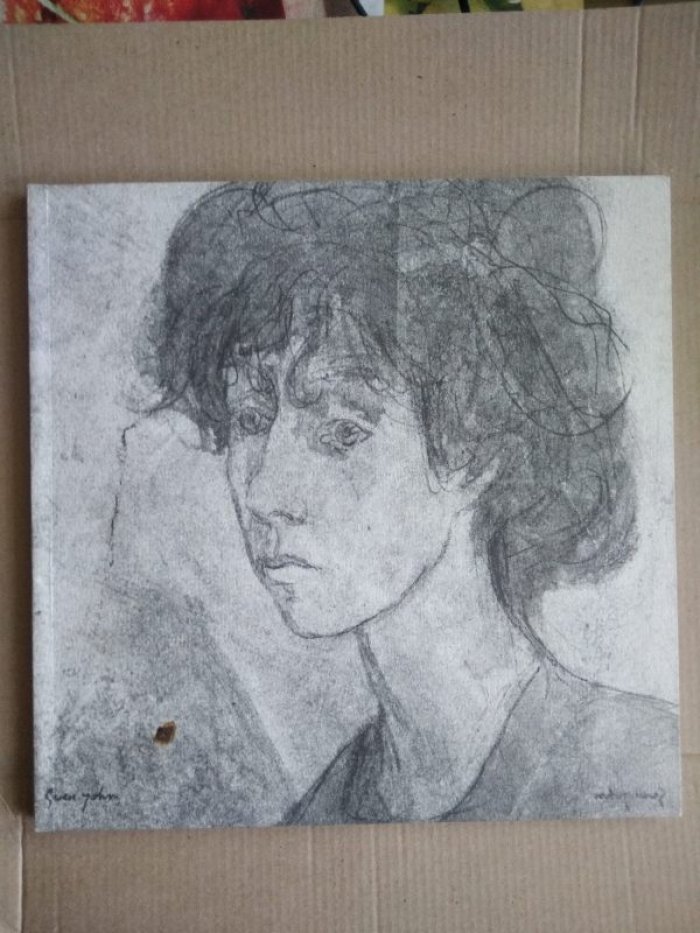
Drawing Distinctions. Twentieth-Century Drawings and Watercolours from the British Council Collection.
На англ
22 500 ₽
Год издания1997
ISBN0-86355-360-5
Страниц88
Обложкамягкий переплет
Описание
A good drawing, whether of a street corner, a bowl offlowers or a march of stripes that dazzle and confuse, is arresting not only for what it is - a sheet of paper bearing information- but for what it can give rise to. A drawing is good, explained David Bomberg, when it tells us something we do not know, reveals some aspect of truth which we have hitherto been unacquainted with: and very good when its convincing execution brings acceptance ofits reality. David Bomberg (b.1890) first came to prominence just before the onset of World War I. He was then a member of the Vorticists, a group of artists hell-bent on debunking conventional methods of painting in Britain, influenced both by Cubism in France and Futurism in Italy. The jerky, angular mannerisms of the Vorticists were an attempt to devise systems for generating energetic mechanised effects on paper and for transforming appearances into patterns. They were also a herald of modernism in Britain, a herald cut down during the artillery campaigns of World War I. which left patterns of such devastation and disordered geometry in the landscape that the fledging abstractions of the Vorticists could only look decorative in their wake. What followed is a story of constantly shifting perspectives, in which a native tendency to particularity is frequently balanced by an interest in experimentation and abstraction - the latter particularly influenced by developments from abroad. During the first part of the century the nervous delicacy of Gwen John and David Jones, the Celtic mysticism of Paul Nash and Cecil Collins, the orderly precision of Edward Bawden and Eric Ravilious and the spiky, wiry dramas of John Minton, Bryan Wynter, John Piper and Graham Sutherland during World War II all seem to exemplify what are considered peculiarly British qualities of line - the whiplash stroke, the rhythms of tracery and silhouette that have been important in British art.
Отзывы покупателей
Отзывов пока нет.
Похожие книги
1914
1913
1903